

blog
.jpg)
Commercial vs. Home Gym Equipment: The Truth Most Buyers Don’t Realize
March 01, 2026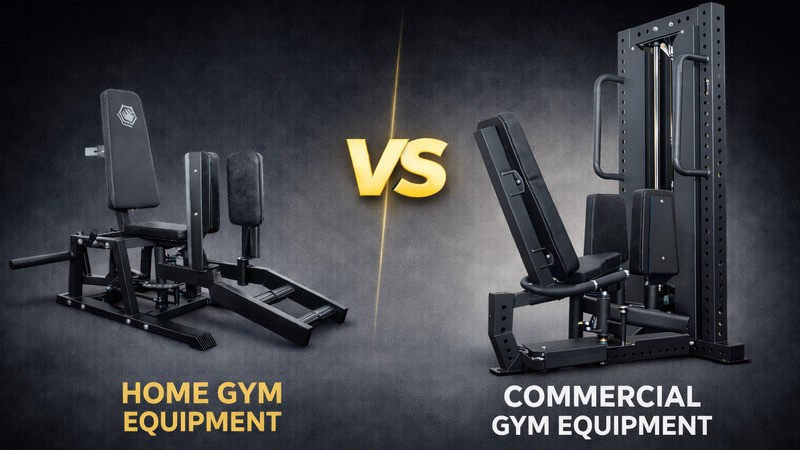
If you're building a home gym, you’ve probably asked yourself: “Do I really need commercial-grade equipment — or is home-use enough?”
The answer isn’t about budget alone. It’s about durability, safety, long-term cost, and how serious you are about your training.
Let’s break this down properly — with real comparisons, practical numbers, and honest insight.
Understanding the Core Difference
Commercial equipment is built for gyms where machines are used 8–14 hours per day by multiple members.Home-use equipment is designed for moderate usage — typically 1–3 users, a few sessions per week.That difference changes everything: steel thickness, weld strength, cable durability, frame stability, and lifespan.
Side-by-Side Structural Comparison
| Feature | Commercial-Grade | Home-Use |
|---|---|---|
| Steel Gauge | 11–12 gauge heavy-duty steel | 14–16 gauge steel |
| Weight Capacity | 800–1,500+ lbs | 300–700 lbs |
| Frame Stability Under Load | Minimal flex | Noticeable flex at higher weights |
| Bearings & Guide Rods | Commercial linear bearings | Standard bushings or lighter bearings |
| Designed Lifespan | 10–15+ years | 3–7 years |
| Resale Value | Strong resale market | Lower resale demand |
The Stability Factor (Most Underrated Difference)
When lifting heavy — especially squats, presses, or hack squat movements — frame stability matters more than most buyers realize.
Even slight frame movement can:
- Reduce confidence under load
- Limit progressive overload
- Increase long-term joint stress
- Create unnecessary safety risk
Commercial-grade equipment is engineered specifically to eliminate that movement.
Long-Term Cost Reality (5-Year Outlook)
| Scenario | Initial Investment | Replacement Likely? | Total 5-Year Cost |
|---|---|---|---|
| Entry-Level Home Unit | $1,200–$1,800 | Yes (upgrade common after 2–4 years) | $2,500–$3,500+ |
| Commercial-Grade Unit | $3,000–$4,500 | Unlikely | $3,000–$4,500 |
What looks “expensive” at the beginning often becomes more economical long-term.
Psychological Impact: Training on Solid Equipment Changes Performance
There’s a mental component most people ignore.When equipment feels stable, smooth, and powerful — you naturally push harder.When equipment feels shaky or limited — you subconsciously hold back.Over years, that difference compounds.
Who Should Choose Commercial-Grade at Home?
| If This Describes You… | Best Fit |
|---|---|
| You train 4–6 days per week | Commercial-Grade |
| You plan to progressively lift heavier over time | Commercial-Grade |
| Multiple people will use the equipment | Commercial-Grade |
| You want 10+ years of use without upgrading | Commercial-Grade |
| You train casually 2–3 times per week | Home-Use May Be Sufficient |
Space Myth: “Commercial Equipment Is Too Big”
Modern all-in-one systems now combine:
- Smith Machine
- Power Rack
- Functional Trainer
- Lat Pulldown
- Low Row
All within a compact footprint designed for basements and garage gyms.You can train like a professional facility — without needing commercial square footage.
Final Thought: Match Equipment to Commitment
The real decision isn’t about price.It’s about how committed you are to strength training.If you’re serious about long-term progress, safety, and performance — commercial-grade equipment at home is often the smarter strategic move.
Need Guidance?
If you're unsure what fits your space and goals, contact us with:
- Your room dimensions
- Your training goals
- Your budget range
- How many users
We’ll help you choose equipment that supports your progress not just this year — but for the next decade.