
blog
.jpg)
Glute Training Machines Compared: What Actually Builds Shape, Strength, and Real Results
April 15, 2026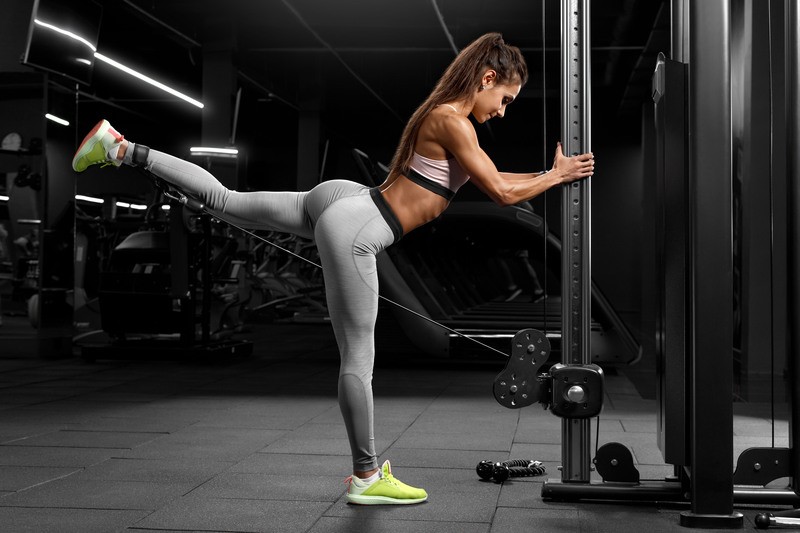
Glute training has become one of the most requested goals in both home and commercial gyms — but the biggest mistake most people make is relying on a single machine or movement pattern.
Different machines build glutes in completely different ways. Some create raw strength and thickness, others improve shape and detail, and some target peak contraction — the key to achieving that lifted, rounded look.
In this article, we break down three major categories of lower body machines from the GearForFit collection and compare how each one contributes to real glute development.
Hack Squat & Leg Press Machines (Heavy Compound Loading)
Machines like the GF Compact 3-in-1 Leg Press & Hack Squat are foundational for lower body strength. While many users associate them with quad training, when used correctly, they become one of the most powerful tools for glute hypertrophy.
How They Work for Glutes
- Deep range of motion increases glute stretch under load
- Hip flexion angle directly influences glute activation
- Foot positioning allows shifting emphasis toward glutes
Key Technique for Glute Focus
- Place feet higher on the platform
- Use a slightly wider stance
- Control the descent slowly
- Drive through heels, not toes
Advantages
- Highest load potential for progressive overload
- Builds overall lower body mass
- Stable and safe for heavy training
Limitations
- Easy to shift load to quads unintentionally
- Less tension at the top of the movement
Result: Thick, powerful glutes with strong overall leg development.
Functional Trainers & Cable Systems (Constant Tension & Isolation)
Functional trainers such as the GF-FXT-300 or similar cable systems provide a completely different stimulus — one that is often missing from traditional machines.
How They Work for Glutes
- Maintain constant resistance throughout the entire movement
- Allow horizontal and angled hip extension movements
- Target smaller stabilizing muscles like glute medius
Most Effective Exercises
- Cable glute kickbacks
- Cable pull-throughs
- Standing hip abductions
Advantages
- Excellent muscle control and mind-muscle connection
- Helps shape and refine glutes
- Lower joint stress compared to heavy machines
Limitations
- Lower total load compared to plate-loaded machines
- Requires more technique and control
Result: Improved glute shape, detail, and muscle activation.
Hip Thrust & Glute-Focused Machines (Peak Contraction & Activation)
Machines or setups that allow hip thrust movements are among the most direct ways to target the glutes. Unlike squats or presses, these prioritize the top portion of the movement — where glutes contract the most.
How They Work for Glutes
- Maximum tension at full hip extension
- Direct isolation of glute max
- Minimal quad involvement
Advantages
- Highest glute activation levels
- Easy to progressively overload safely
- Strong carryover to aesthetics (roundness & lift)
Limitations
- Limited exercise variety
- Does not replace full lower body training
Result: Round, lifted glutes with strong peak contraction.
Full Comparison Table
| Machine Type | Primary Movement | Load Capacity | Glute Activation Zone | Muscle Focus | Best For | Difficulty Level | Range of Motion | Common Mistake |
|---|---|---|---|---|---|---|---|---|
| Hack Squat / Leg Press | Vertical / angled pressing | Very High | Bottom (stretch phase) | Glutes + Quads | Mass & strength | Medium | Deep | Feet too low → quad dominant |
| Functional Trainer | Cable hip extension | Moderate | Full range (constant tension) | Glutes (max + medius) | Shape & isolation | High (requires control) | Adjustable angles | Using momentum instead of control |
| Hip Thrust Machine | Horizontal hip extension | High | Top (peak contraction) | Glute Max | Activation & roundness | Low–Medium | Moderate | Not fully locking out hips |
What Most People Get Wrong
One of the biggest misconceptions is trying to find a single “best machine” for glutes. In reality, each machine targets a different part of the muscle function:
- Stretch under load → builds size
- Constant tension → builds control and shape
- Peak contraction → builds roundness and lift
Ignoring any one of these leads to incomplete development.
Optimal Training Structure for Glute Growth
To maximize results, your training should combine all three machine types in a structured way:
- Start: Hack squat or leg press (heavy sets, low reps)
- Middle: Cable exercises (moderate weight, controlled reps)
- Finish: Hip thrusts (focus on squeeze and contraction)
This sequence ensures that the glutes are trained through all phases of muscle function.
Glute development is not about choosing the “best” machine — it’s about understanding how each machine contributes to the final result.
If your goal is real transformation, not just effort, the strategy is simple: combine load, control, and contraction.
That’s where real glute growth happens.